PLCSTM: A Deep Hybrid Architecture for Polyglot Source Code Classification
PLCSTM (Programming Language Classifier using Spatiotemporal Modeling) is a specialized machine learning framework designed to automatically categorize source code into 22 dis...
$ 69.00
Quality Guaranteed
Reviewed project files and clear structure.
24/7 Support
Reach us anytime for setup and usage help.
Instant Access
Download your files right after checkout.
Source Included
Code, assets, and project-ready materials included.
About This Product
PLCSTM: A Deep Hybrid Architecture for Polyglot Source Code Classification
Description
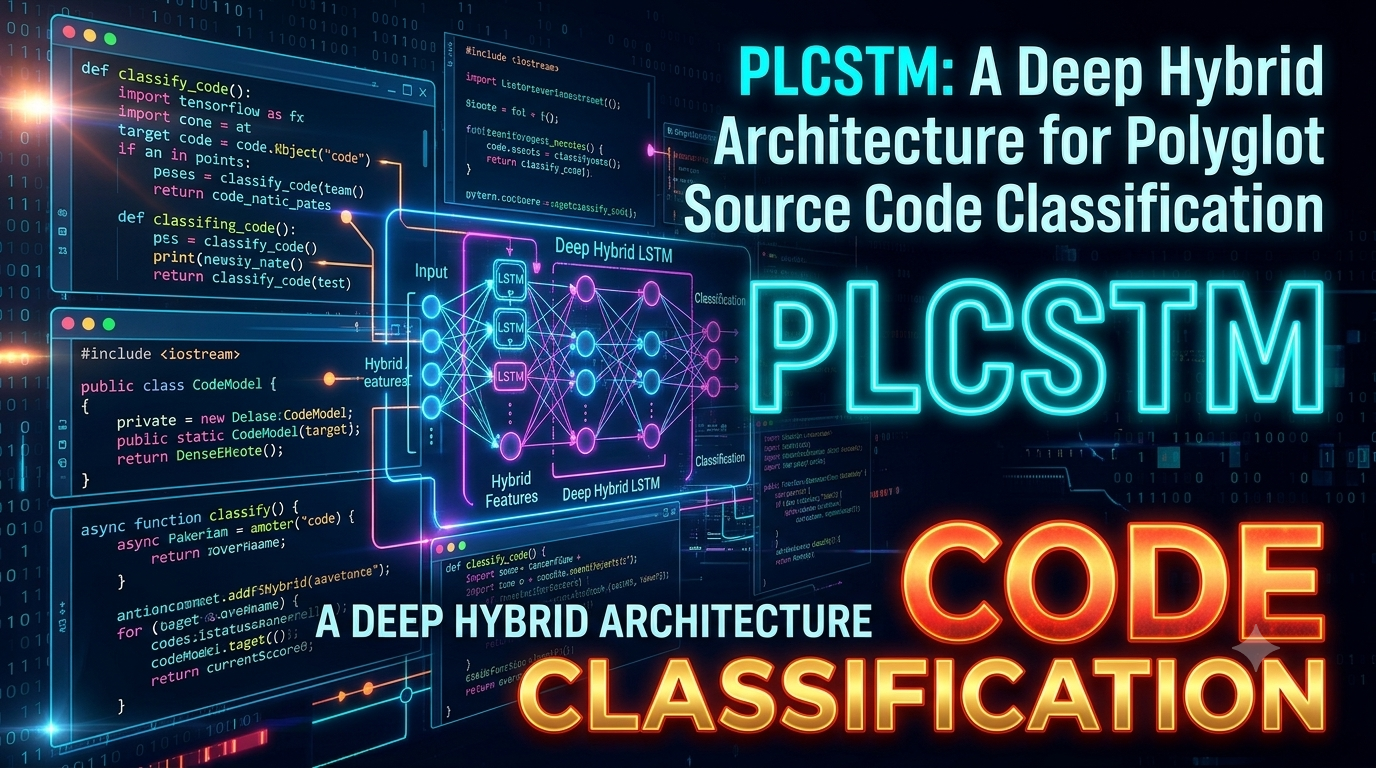
PLCSTM (Programming Language Classifier using Spatiotemporal Modeling) is a specialized machine learning framework designed to automatically categorize source code into 22 distinct programming languages. Unlike traditional classifiers, PLCSTM is a unified, high-dimensional neural architecture that treats code as a structured sequence of spatial motifs and temporal patterns.
The model is engineered to extract "code-signatures"—the unique way different languages nest logic and use symbols. This allows the system to differentiate between syntactically similar languages like C# and Java by analyzing the spatiotemporal relationships between tokens. Integrated into a secure Django-based platform, PLCSTM provides an end-to-end "IDE-integrated" experience for automated code labeling and security auditing.
Input
- Source Snippets: Raw source code text provided via the web interface.
- Development Scripts: Individual source files or complex logic blocks for real-time identification.
Output
- Classification: The identified programming language (e.g., Python, C++, Rust, Go, etc.).
- Confidence Score: A probability percentage (0-100%) reflecting the model’s certainty in its prediction.
- Syntax Mapping: Metadata used to resolve overlaps in similar web-technology languages.
Key Features
- Spatiotemporal Pattern Recognition: PLCSTM uses a proprietary layer configuration to identify both local syntax "stamps" (spatial) and the sequential flow of logical execution (temporal).
- Hybrid Heuristic Refiner: A specialized logic gate that double-checks the neural output against "Smoking Gun" syntax markers (like type annotations or structural braces) to ensure perfect accuracy for CSS and TypeScript.
- High-Capacity Vocabulary: Utilizes a 15,000-word specialized tokenizer designed specifically for programming lexicons and character sequences.
- Singleton Execution Engine: Optimized for production; the PLCSTM engine loads into memory once upon deployment, ensuring sub-second inference for every request.
- VS Code Ecosystem Aesthetics: A fully realized user interface mirroring the Visual Studio Code environment, providing developers with a familiar workspace for code analysis.
- Secure User Management: A robust Authentication Layer (Login, Register, Logout) that protects the inference engine and manages user-specific history.
Tags
#PLCSTM #SourceCodeClassification #MachineLearning #SpatiotemporalModeling #NLPforCode #Django #AIArchitecture #CodeAnalysis #PolyglotClassifier #VSCodeTheme
References
1.Keras Documentation (2025). Serializing custom subclassed models with register_keras_serializable.
2.Django Project (2025). Implementing secure authentication and singleton asset loading.
3.Spatiotemporal Research. Methods for sequence classification in high-dimensional text data.
Backend Programming Language
Python
Backend Web Framework
Django
Frontend Structure
HTML
Frontend Styling
CSS
No reviews available for this product.