
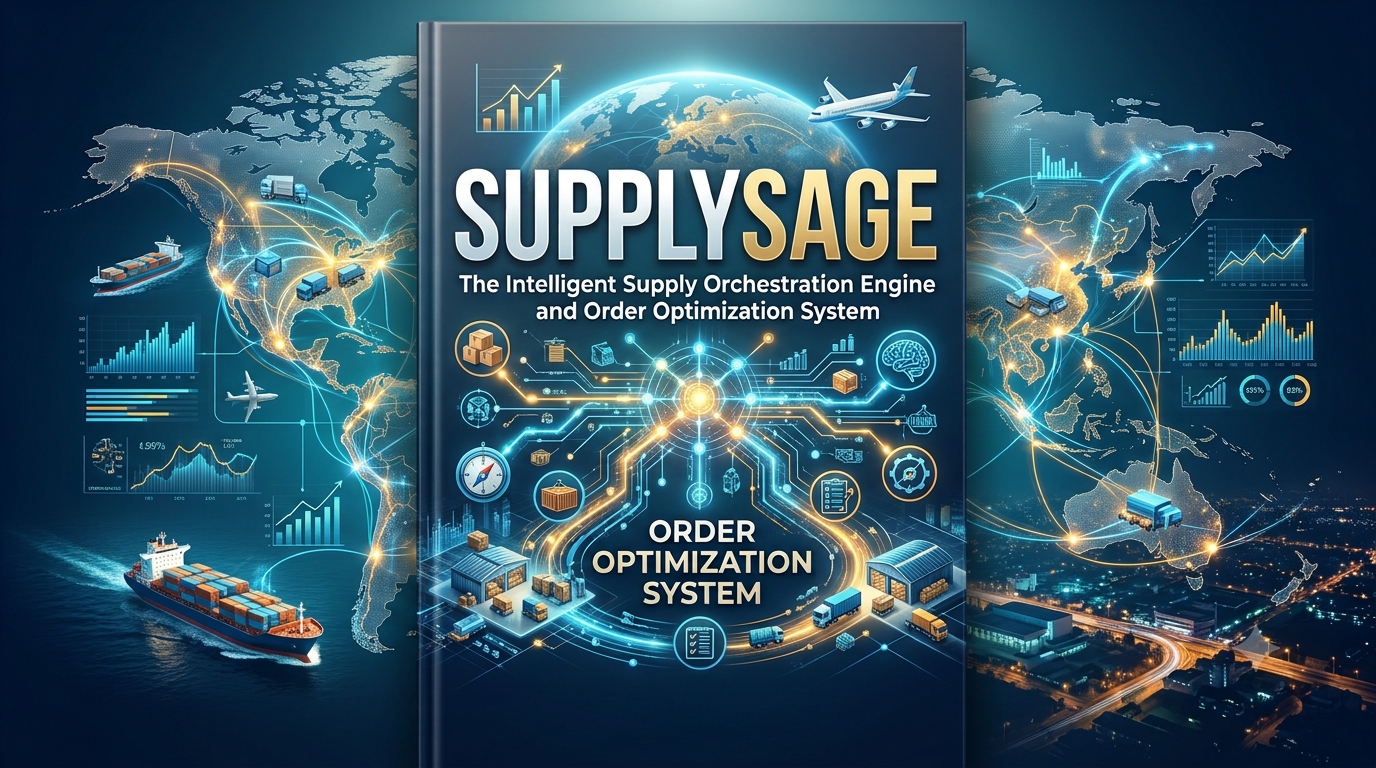
SupplySage - The Intelligent Supply Orchestration Engine and Order Optimization System
A full-scale, AI-powered procurement management platform that streamlines vendor, RFQ, and purchase order management. It incorporates deep learning models for vendor scoring and...
About This Product
SupplySage - The Intelligent Supply Orchestration Engine and Order Optimization System
1. Project Overview
A full-scale, AI-powered procurement management platform that streamlines vendor, RFQ, and purchase order management. It incorporates deep learning models for vendor scoring and price forecasting. Includes rich user interaction workflows with multi-role support (Admin, Procurement Manager, Finance Officer, Vendor).
2. Tech Stack
- Backend API: Django + Django REST Framework
- Deep Learning: PyTorch or TensorFlow (price prediction & vendor scoring)
- Frontend UI: Django Templates or ReactJS
- Database: PostgreSQL or SQLite
- Authentication: Django Auth + Role Management
- Deployment: Docker + Render/Heroku/AWS
3. Core Modules & Features
- User Management with Roles
- Vendor Onboarding and Evaluation
- Quotation Requests and Comparison (RFQ)
- Purchase Order Generation and Delivery Tracking
- Deep Learning-powered Vendor Performance Classification
- Dynamic Pricing Forecasting for Raw Materials
- Role-based Dashboards and Alerts
4. User Roles & Interactions
1.Admin
- Full access to system configuration, users, and ML monitoring
- Manage user roles and system health
2.Procurement Manager
- Create and issue RFQs
- Review quotations and generate purchase orders
- Access vendor ML scores and price predictions
3.Finance Officer
- Approve or reject purchase orders
- Compare cost estimates and select quotations
4.Vendor
- Respond to RFQs
- View and confirm purchase orders
- Track delivery status and history
5. Machine Learning Features
5.A. Vendor Performance Scoring (Classification Model)
·- Input: delivery delay, defect rate, cost deviation, responsiveness
·- Model: Random Forest or Feedforward Neural Network
·- Output: Tiers (Excellent, Good, Average, Poor)
6.B. Dynamic Pricing Prediction (Regression/Sequence Model)
·- Input: material type, season, market trend, location
·- Model: LSTM or 1D CNN
·- Output: Price forecast for 30/60/90 days
6. Database Schema (Simplified)
- UserProfile: user_id, role (admin, manager, finance, vendor)
- Vendor: id, name, rating, contact, historical_score
- RFQ: id, item, quantity, issued_by, status, deadline
- Quotation: id, rfq (FK), vendor (FK), price, delivery_time
- PurchaseOrder: id, vendor (FK), items, status, delivery_date
- PriceForecast: id, material, forecast_date, predicted_price
7. Project Directory Structure
procurement_project/
├── manage.py
├── procurement/
│ ├── models.py
│ ├── views.py
│ ├── urls.py
│ ├── serializers.py
│ ├── templates/
│ ├── ml_model/
│ │├── vendor_classifier.py
│ │├── price_predictor.py
│ │└── model_files/
├── users/
│ └── user_profiles.py
├── static/
├── Dockerfile
└── requirements.txt
8. UI Interaction Workflows
- Manager logs in → Creates RFQ → Vendor receives notification
- Vendor logs in → Submits quotation → Finance compares prices
- Manager approves vendor → Creates purchase order → Vendor confirms
- ML model classifies vendor tier based on delivery history → Score displayed in UI
- Price prediction auto-fills forecasted cost in quotation comparison form
- Admin dashboard shows alerts: delayed delivery, price spikes, etc.
9. Deployment Plan
- Dockerize Django app and ML components
- Configure Gunicorn + Nginx for production
- Use PostgreSQL in cloud deployment
- Deploy to Render, Heroku, or AWS EC2
- Schedule ML model updates via CRON or Celery
10. Suggested Development Timeline
- Week 1: Setup project, models, user auth, and admin panel
- Week 2: Implement vendor, RFQ, and quotation modules
- Week 3: Build purchase order workflows and delivery tracking
- Week 4: Train and integrate vendor scoring model
- Week 5: Integrate price forecasting and dashboard
- Week 6: Polish UI, add alerts, finalize deployment with Docker
Python
Django
HTML
CSS
No reviews available for this product.